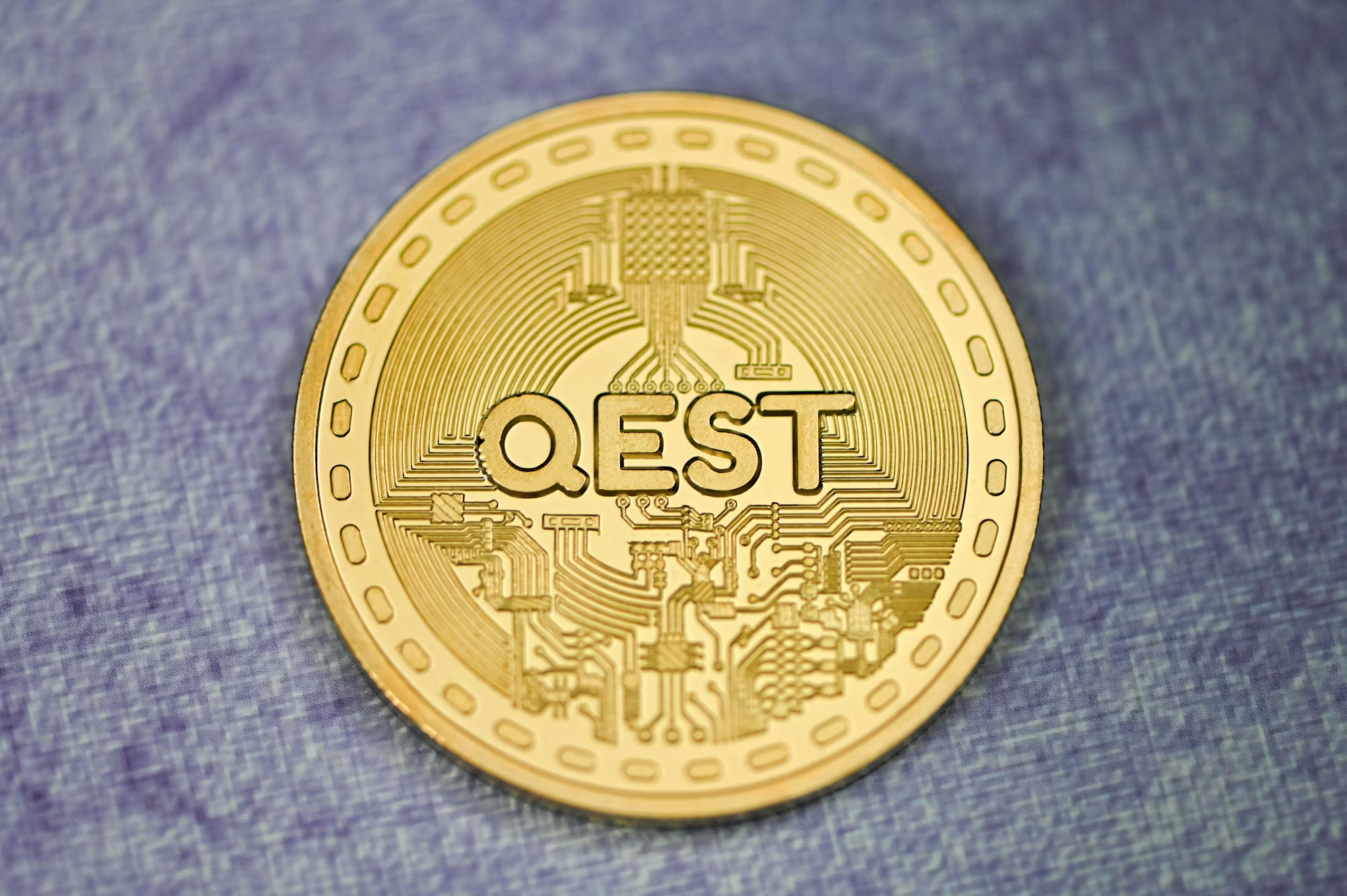
The finance industry is undergoing a significant transformation, driven by the rise of financial technology, commonly known as fintech. This innovative sector is revolutionizing the way financial services are delivered, enhancing efficiency, accessibility, and customer experience. From mobile banking to blockchain, fintech encompasses a wide range of technologies and solutions that are reshaping traditional financial practices. This article delves into the evolution of fintech, its impact on the finance industry, and the future possibilities it holds.
The journey of fintech began in the late 20th century when banks started adopting technology to streamline their operations. Early innovations included the introduction of automated teller machines (ATMs) and electronic funds transfers, which laid the groundwork for more advanced financial services. However, the real revolution began in the 2000s with the advent of the internet and mobile technology. The widespread use of smartphones enabled financial institutions to offer services that were previously inaccessible to many consumers.
One of the most significant developments in fintech is mobile banking. Consumers can now manage their finances from the palm of their hand, performing transactions, checking balances, and accessing financial advice anytime, anywhere. This convenience has not only improved user experience but has also attracted a new generation of tech-savvy consumers who prioritize accessibility and speed. Mobile banking apps often incorporate features such as budgeting tools, spending analysis, and personalized recommendations, empowering users to take control of their financial health.
In addition to mobile banking, peer-to-peer (P2P) lending platforms have emerged as a popular alternative to traditional banking. These platforms connect borrowers directly with investors, eliminating the need for intermediaries. This model not only reduces costs but also increases access to capital for individuals and small businesses that may struggle to secure loans through conventional banks. P2P lending has democratized the lending process, enabling more people to obtain financing and invest in diverse opportunities.
Another key area where fintech is making waves is in payments. Digital wallets and payment apps, such as PayPal and Venmo, have transformed how people transact. These platforms allow for instant, secure money transfers, facilitating transactions without the need for cash or physical cards. As consumers increasingly favor digital transactions, businesses are adapting by offering multiple payment options, enhancing customer satisfaction and encouraging sales.
The rise of cryptocurrencies has also been a pivotal moment in the evolution of fintech. Digital currencies like Bitcoin and Ethereum have created new investment opportunities and challenged traditional financial systems. Blockchain technology, which underpins cryptocurrencies, offers a decentralized and secure way to record transactions. This transparency and security can significantly reduce fraud and streamline processes in various financial sectors, from banking to supply chain management.
Moreover, fintech has fostered the growth of robo-advisors—automated investment platforms that provide financial advice based on algorithms. These services are typically more affordable than traditional financial advisors, making investment management accessible to a broader audience. Robo-advisors analyze users’ financial goals and risk tolerance, creating personalized portfolios that can be adjusted over time. This innovation has opened the doors for individuals who may have previously felt intimidated by the investment landscape.
As fintech continues to evolve, regulatory considerations become increasingly important. Governments and financial authorities are working to establish frameworks that encourage innovation while ensuring consumer protection and market stability. Striking the right balance between fostering innovation and maintaining regulatory oversight is crucial for the sustainable growth of the fintech sector. Collaboration between fintech companies and regulators can lead to the development of policies that promote transparency, accountability, and consumer trust.
The impact of fintech is not limited to consumer services; it also extends to businesses. Small and medium-sized enterprises (SMEs) are benefiting from fintech solutions that simplify financial management. Online accounting software and expense management tools streamline operations, allowing business owners to focus on growth rather than administrative tasks. Furthermore, fintech solutions often offer more flexible financing options, enabling SMEs to access capital quickly and efficiently.
Fintech’s influence reaches across borders, driving financial inclusion in developing economies. Digital financial services are providing underserved populations with access to banking and credit. Mobile payment platforms are particularly impactful in regions where traditional banking infrastructure is limited. By enabling individuals to conduct transactions and save money, fintech is empowering communities and fostering economic growth.
Looking ahead, the future of fintech appears promising. Innovations such as artificial intelligence (AI) and machine learning are set to enhance data analysis and risk assessment, enabling financial institutions to make more informed decisions. Additionally, as cybersecurity threats grow, fintech companies are investing in advanced security measures to protect consumer data and build trust.
Collaboration within the fintech ecosystem is also expected to increase. Traditional financial institutions are recognizing the value of partnering with fintech startups to leverage their technology and agility. This symbiotic relationship can lead to the development of innovative solutions that benefit both parties and enhance the overall customer experience.
In conclusion, the evolution of financial technology is reshaping the finance industry in profound ways. From mobile banking and P2P lending to blockchain and robo-advisors, fintech is driving innovation and improving accessibility to financial services. As the industry continues to evolve, the potential for growth and positive impact on consumers and businesses alike is immense. By embracing these technological advancements and fostering collaboration, stakeholders can create a more inclusive and efficient financial landscape for the future.